

Introduction and façade
Introduction and façade
Introduction and façade
Audio transcription
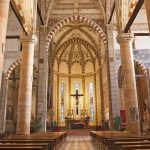
The Basilica of Sant’Anastasia is a masterly example of Italian Gothic style. It has kept the name of a pre-existing church from the Lombard period, dedicated to the Virgin Anastasia, a 4th century martyr. The building was situated at the end of the decumanus maximus: the main Roman road in Verona that connected Porta Borsari to the former Postumio Bridge.
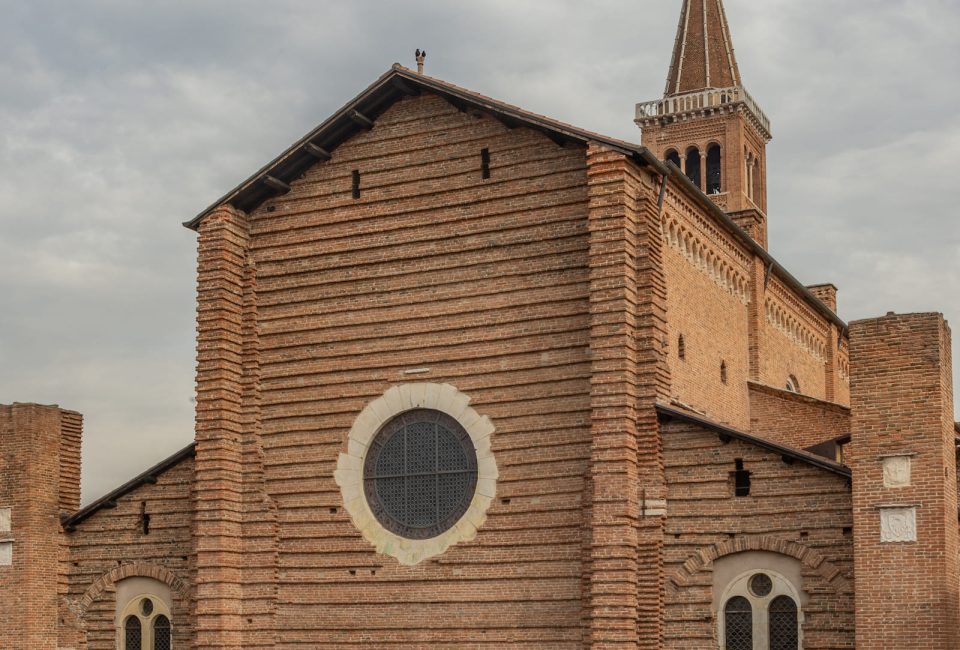
Around 1290, the order of the Dominicans settled here and began the construction of the Gothic basilica, dedicated to the martyr St. Peter, a Dominican who originated from Verona and patron of the city alongside St. Zeno. The work was possible thanks to the support of the Della Scala family, who ruled Verona from the late 13th to the late 14th century. To the left of the façade is the sarcophagus of Guglielmo da Castelbarcos, friend and counsellor to Cangrande I and the main financier of the first building campaign of the basilica. Outside, you can note the precious twin portal in polychrome marble that stands out from the terracotta façade. On the architrave there are carved scenes from the life of Christ; on the central pillar there is St. Dominic with the star symbol under his feet, to the left St. Peter the Martyr with the sun and on the right, St. Thomas Aquinas with the moon. On the sides of the portal a two tiered cycle with episodes from the life of St. Peter Martyr was planned that however, as shown by the empty frames of the spurs, was never completed. The cladding of the façade was also never completed.